

.webp)
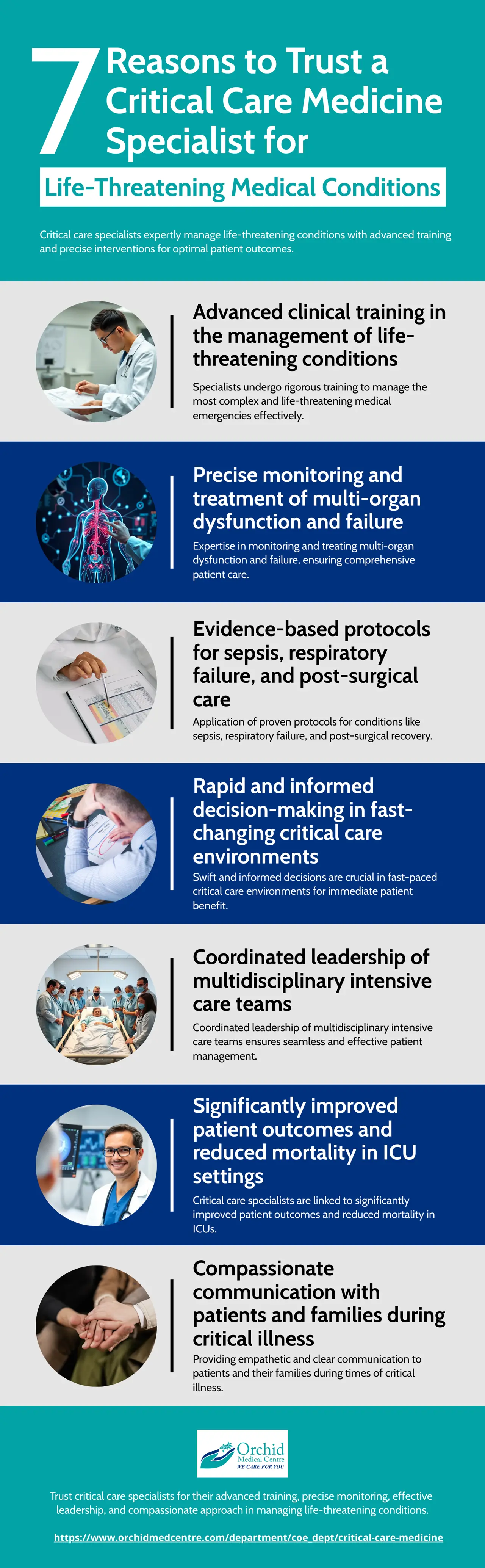
Summary: A critical care specialist brings quick treatment and unbroken monitoring to the fore when an emergency strikes, giving patients with severe illness or trauma a firmer route to recovery through skilled, evidence-led care.
Key Takeaways:
- A critical care specialist takes charge the moment severe illness or trauma allows no delay.
- Steady monitoring catches trouble before a minor change turns serious.
- Trained hands and advanced machines together push survival higher.
- Treatment runs on tested evidence rather than guesswork.
- The plan bends with the patient as the hours pass.
Severe illness moves fast. A serious accident moves faster. In the first hour after either one, the choices made at the bedside carry more weight than most families ever grasp. This is the ground a critical care specialist covers well, reading a fragile situation and acting before it worsens. Every minute spent waiting is a minute the body cannot spare.
What sets these doctors apart shows up in the details. A critical care specialist picks up the faint signals that point to trouble ahead, then steps in while there is still time to change the outcome. Their training bends towards the sickest patients, the cases where judgement decides who recovers. Families sense that steadiness when someone dear starts to improve.
.webp)
.webp)


.jpeg)

.jpg)
.webp)
.webp)
.webp)
.webp)




.webp)
.webp)
.jpg)
.webp)
.webp)
.webp)
.jpg)
.jpg)
.jpg)
.webp)
.webp)
.jpg)
.jpg)
.webp)
.webp)